

Read the full article on KETV 7

Friday marks 60 days since Congress was first notified by the Trump administration about its use of military force in Iran. Now, under the War Powers Act, the president must either secure congressional approval for further military action or pull out U.S. forces.Friday, the Trump administration said it won’t do either.The administration argued that the 60-day deadline under the War Powers Act does not apply since a ceasefire between the U.S. and Iran began in early April. And, because of the ceasefire, a senior White House official said the 60-day deadline is technically “terminated.”That same official said no U.S. or Iranian strikes have happened since. President Donald Trump argued that the law itself was unconstitutional. “It’s never been used. It’s never been adhered to, and every other president considered it totally unconstitutional, and we agree with that,” Trump told reporters Friday. The president also claimed that past presidents have not adhered to the law. While several U.S. presidents have justified their use of force under the War Powers Act, then-President George W. Bush eventually did persuade Congress to approve military action against Iraq after 9/11. Former President Barack Obama also faced pressure to stop operations in Libya after 90 days, but argued his actions did not rise to the level of “hostilities” described in the law.Despite the administration’s stance, the standoff remained in the Strait of Hormuz, where Iran maintains control of the essential waterway and the U.S. Navy enforces its blockade. And still, there is no clear path to a long-term peace deal. Trump said that he was not satisfied with Iran’s latest proposal, but offered few details on where it stands. He noted that Iran has asked for terms he cannot agree to. He confirmed negotiations are ongoing by phone but described Iran’s leadership as “extremely disjointed.” “In terms of the negotiation telephonically, they’ve made strides, but I’m not sure if they’ll ever get there,” Trump said. “They have a tremendous problem getting along with each other in Iran.”The president also addressed gas prices, claiming they would come “tumbling” down once the war is officially over. Energy experts predict higher prices will likely persist through the rest of the year and possibly into 2027. Trump and other administration officials have long argued that higher gas prices are a short-term pain for long-term national security, ensuring Iran does not develop a nuclear weapon. When asked about next steps, Trump laid out two options on Friday: either make a deal or “blast” Iran.Watch the latest on the war in Iran:
Friday marks 60 days since Congress was first notified by the Trump administration about its use of military force in Iran. Now, under the War Powers Act, the president must either secure congressional approval for further military action or pull out U.S. forces.
Friday, the Trump administration said it won’t do either.
Advertisement
The administration argued that the 60-day deadline under the War Powers Act does not apply since a ceasefire between the U.S. and Iran began in early April. And, because of the ceasefire, a senior White House official said the 60-day deadline is technically “terminated.”
That same official said no U.S. or Iranian strikes have happened since. President Donald Trump argued that the law itself was unconstitutional.
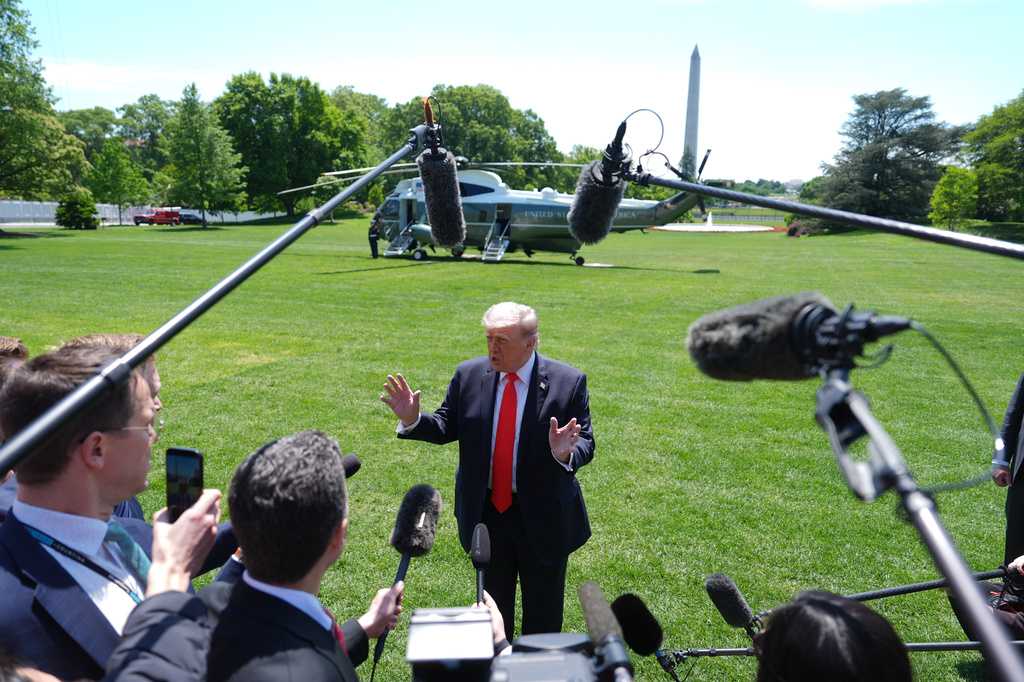
“It’s never been used. It’s never been adhered to, and every other president considered it totally unconstitutional, and we agree with that,” Trump told reporters Friday.
The president also claimed that past presidents have not adhered to the law.
While several U.S. presidents have justified their use of force under the War Powers Act, then-President George W. Bush eventually did persuade Congress to approve military action against Iraq after 9/11.
Former President Barack Obama also faced pressure to stop operations in Libya after 90 days, but argued his actions did not rise to the level of “hostilities” described in the law.
Despite the administration’s stance, the standoff remained in the Strait of Hormuz, where Iran maintains control of the essential waterway and the U.S. Navy enforces its blockade.
And still, there is no clear path to a long-term peace deal.
Trump said that he was not satisfied with Iran’s latest proposal, but offered few details on where it stands. He noted that Iran has asked for terms he cannot agree to.
He confirmed negotiations are ongoing by phone but described Iran’s leadership as “extremely disjointed.”
“In terms of the negotiation telephonically, they’ve made strides, but I’m not sure if they’ll ever get there,” Trump said. “They have a tremendous problem getting along with each other in Iran.”
The president also addressed gas prices, claiming they would come “tumbling” down once the war is officially over. Energy experts predict higher prices will likely persist through the rest of the year and possibly into 2027.
Trump and other administration officials have long argued that higher gas prices are a short-term pain for long-term national security, ensuring Iran does not develop a nuclear weapon.
When asked about next steps, Trump laid out two options on Friday: either make a deal or “blast” Iran.
Watch the latest on the war in Iran: