

Read the full article on KETV 7

The honking of cranes fills the skies over central Nebraska each spring, as roughly 1.2 million sandhill cranes pass through the central part of the state during their annual migration.“It’s kind of my happy place now,” said Leanne Carmody, a visitor from Illinois, watching the birds gather at sunset.The migration, one of North America’s most notable wildlife spectacles, draws visitors from across the country and beyond. Brice Krohn, president and CEO of the Crane Trust, said people from all 50 states, as well as Canada and Mexico, have traveled to the region to witness the phenomenon.Pilgrims like Carmody come to experience the scale and beauty of the migration firsthand.“To see the bids and nature and just to be a part of something that’s so big and so unbelievable,” she said.But the cranes, dancing in pointed patterns, aren’t the only ones casting a shadow on the Platte River.”I have a lot of concern about losing the opportunity to apply for Nebraska Environmental Trust funds,” Krohn said.During this year’s legislative session, Gov. Jim Pillen proposed transferring $40 million from the Nebraska Environmental Trust, a fund established more than 30 years ago to support conservation efforts, to help address a state budget shortfall.Advocates warned the proposal posed a significant threat to conservation programs across the state.“I think it was the most serious threat we’ve seen yet for the Nebraska Environmental Trust,” said Traci Bruckner of Audubon Great Plains.Lawmakers ultimately approved a smaller transfer of $13.5 million from the trust, which typically brings in $20 million annually and helps projects focused on water quality, air, soil, wildlife habitat and waste management.Even the reduced amount has raised concerns among conservation groups that rely on the funding.“It is a funding source for conservation organizations truly across Nebraska,” said Marcos Stoltzfus, director of the Rowe Sanctuary. “It’s certainly been one that we’ve relied on.”The impact of those dollars is visible along the Platte River, where grants have supported trails, viewing blinds and habitat restoration projects, including efforts to remove invasive vegetation and maintain river channels suitable for cranes and other wildlife.“Our conservation efforts are focused especially on river channel management and removing vegetation so that it’s suitable habitat for cranes and other wildlife,” Stoltzfus said.A proposed legislative resolution that would have allowed voters to decide on additional protections for the trust narrowly failed, leaving the fund vulnerable as the state faces a projected budget deficit exceeding $600 million next year.The stakes extend beyond conservation alone. Studies estimate the crane migration generates about $28 million annually for the regional economy, supporting tourism and local businesses.“There’s kind of an ongoing benefit to those projects that are really important, not just to the conservation organizations, but to the region at large as well,” Stoltzfus said.The experience carries a deeper significance for visitors like Jennifer Mason of Chicago. Without stable funds to support the conservation efforts, she and others worry that people will lose more than an economic engine.“Just watching how the families kind of stick together and just watching their behavior, it just reminds you how much nature kind of runs through to us as humans,” Mason said.As cranes continue their centuries-old journey along the Platte, conservationists and visitors alike say the challenge will be ensuring the landscape they depend on remains intact for generations to come. Conservation groups say they will bring the fight to protect the fund to next year’s legislative session.Make sure you can always see the latest news, weather, sports and more from KETV NewsWatch 7 on Google search.NAVIGATE: Home | Weather | Local News | National | Sports | Newscasts on demand |
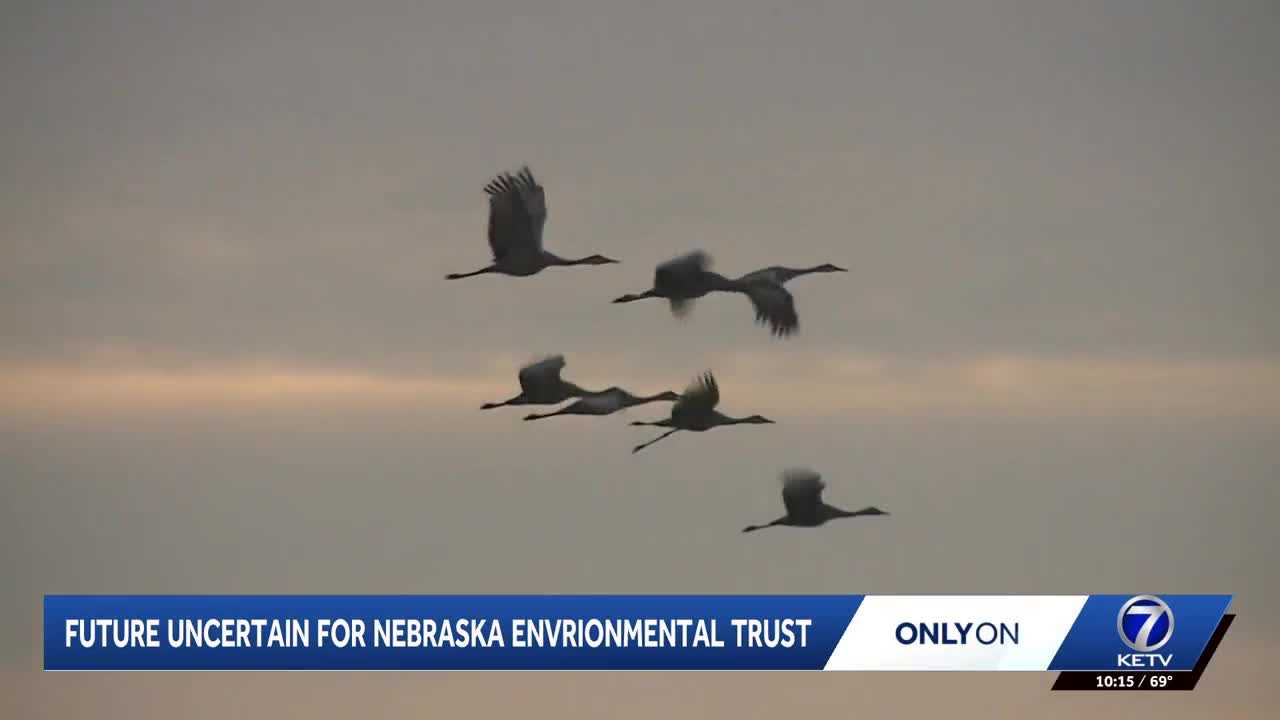
The honking of cranes fills the skies over central Nebraska each spring, as roughly 1.2 million sandhill cranes pass through the central part of the state during their annual migration.
“It’s kind of my happy place now,” said Leanne Carmody, a visitor from Illinois, watching the birds gather at sunset.
Advertisement
The migration, one of North America’s most notable wildlife spectacles, draws visitors from across the country and beyond. Brice Krohn, president and CEO of the Crane Trust, said people from all 50 states, as well as Canada and Mexico, have traveled to the region to witness the phenomenon.
Pilgrims like Carmody come to experience the scale and beauty of the migration firsthand.
“To see the bids and nature and just to be a part of something that’s so big and so unbelievable,” she said.
But the cranes, dancing in pointed patterns, aren’t the only ones casting a shadow on the Platte River.
“I have a lot of concern about losing the opportunity to apply for Nebraska Environmental Trust funds,” Krohn said.
During this year’s legislative session, Gov. Jim Pillen proposed transferring $40 million from the Nebraska Environmental Trust, a fund established more than 30 years ago to support conservation efforts, to help address a state budget shortfall.
Advocates warned the proposal posed a significant threat to conservation programs across the state.
“I think it was the most serious threat we’ve seen yet for the Nebraska Environmental Trust,” said Traci Bruckner of Audubon Great Plains.
Lawmakers ultimately approved a smaller transfer of $13.5 million from the trust, which typically brings in $20 million annually and helps projects focused on water quality, air, soil, wildlife habitat and waste management.
Even the reduced amount has raised concerns among conservation groups that rely on the funding.
“It is a funding source for conservation organizations truly across Nebraska,” said Marcos Stoltzfus, director of the Rowe Sanctuary. “It’s certainly been one that we’ve relied on.”
The impact of those dollars is visible along the Platte River, where grants have supported trails, viewing blinds and habitat restoration projects, including efforts to remove invasive vegetation and maintain river channels suitable for cranes and other wildlife.
“Our conservation efforts are focused especially on river channel management and removing vegetation so that it’s suitable habitat for cranes and other wildlife,” Stoltzfus said.
A proposed legislative resolution that would have allowed voters to decide on additional protections for the trust narrowly failed, leaving the fund vulnerable as the state faces a projected budget deficit exceeding $600 million next year.
The stakes extend beyond conservation alone. Studies estimate the crane migration generates about $28 million annually for the regional economy, supporting tourism and local businesses.
“There’s kind of an ongoing benefit to those projects that are really important, not just to the conservation organizations, but to the region at large as well,” Stoltzfus said.
The experience carries a deeper significance for visitors like Jennifer Mason of Chicago. Without stable funds to support the conservation efforts, she and others worry that people will lose more than an economic engine.
“Just watching how the families kind of stick together and just watching their behavior, it just reminds you how much nature kind of runs through to us as humans,” Mason said.
As cranes continue their centuries-old journey along the Platte, conservationists and visitors alike say the challenge will be ensuring the landscape they depend on remains intact for generations to come. Conservation groups say they will bring the fight to protect the fund to next year’s legislative session.
Make sure you can always see the latest news, weather, sports and more from KETV NewsWatch 7 on Google search.
NAVIGATE: Home | Weather | Local News | National | Sports | Newscasts on demand |