

Read the full article on KETV 7
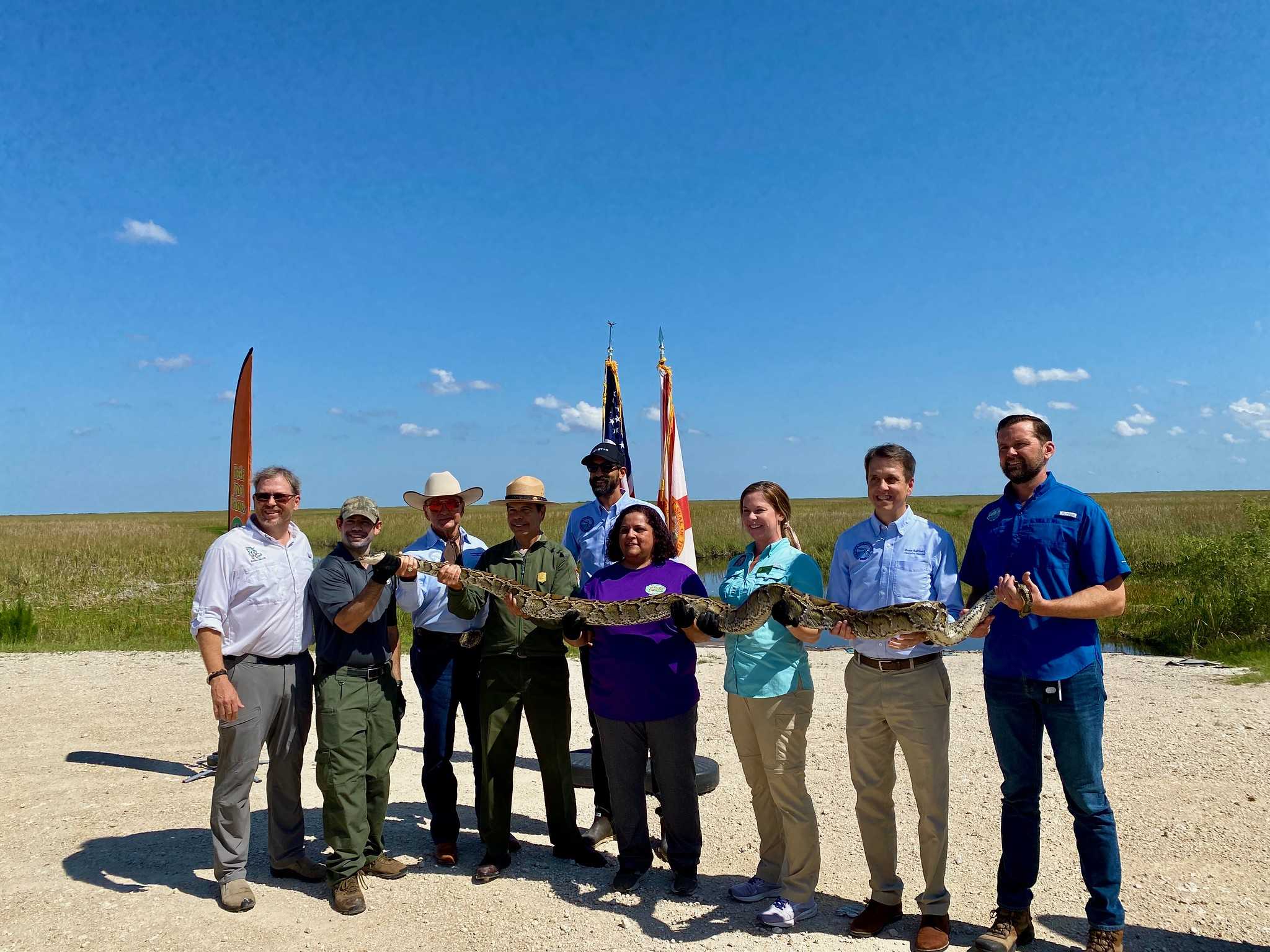
Scientists discovered a way to lure invasive Burmese pythons that have upset Florida’s ecosystem, including the Everglades.According to a 2023 report by Southern Illinois University, in September 2022, researchers who were tracking the movements of raccoons and possums in Key Largo noticed that the animals were being eaten by Burmese pythons.The raccoons and possums were fitted with tracking devices, so the researchers had to retrieve the tracking devices.While retrieving the tracking devices, the scientists discovered that it allowed them to find the Burmese pythons that had eaten the possums or raccoons.The researchers determined that using raccoons and possums with tracking devices as bait could help with capturing Burmese pythons and removing them from the environment.The USDA National Invasive Species Information Center and the Florida Fish and Wildlife Conservation Commission (FWC) have designated the Burmese python as an invasive species, as the large snakes are native to Southeast Asia.Burmese pythons were introduced in the United States as exotic pets, but over the years, the snakes either escaped or were intentionally released into the wild, primarily in South Florida.Since 2017, the FWC has enacted the Python Action Team — Removing Invasive Constrictors program to find and kill Burmese pythons on public lands.As of April 2025, the state has removed more than 23,500 pythons from public lands, and of that total, more than 11,000 pythons were removed by the Python Action Team in conjunction with the South Florida Water Management District.The FWC also sanctions the 10-day Florida Python Challenge annually.The competition encourages participants to remove Burmese pythons from seven locations in South Florida.CLICK HERE TO VIEW INTERACTIVE MAPParticipants who reach certain criteria are eligible for cash prizes. According to the FWC, last year, a record 294 Burmese pythons were removed from South Florida with the help of 934 participants from 30 states and Canada.
Scientists discovered a way to lure invasive Burmese pythons that have upset Florida’s ecosystem, including the Everglades.
According to a 2023 report by Southern Illinois University, in September 2022, researchers who were tracking the movements of raccoons and possums in Key Largo noticed that the animals were being eaten by Burmese pythons.
Advertisement
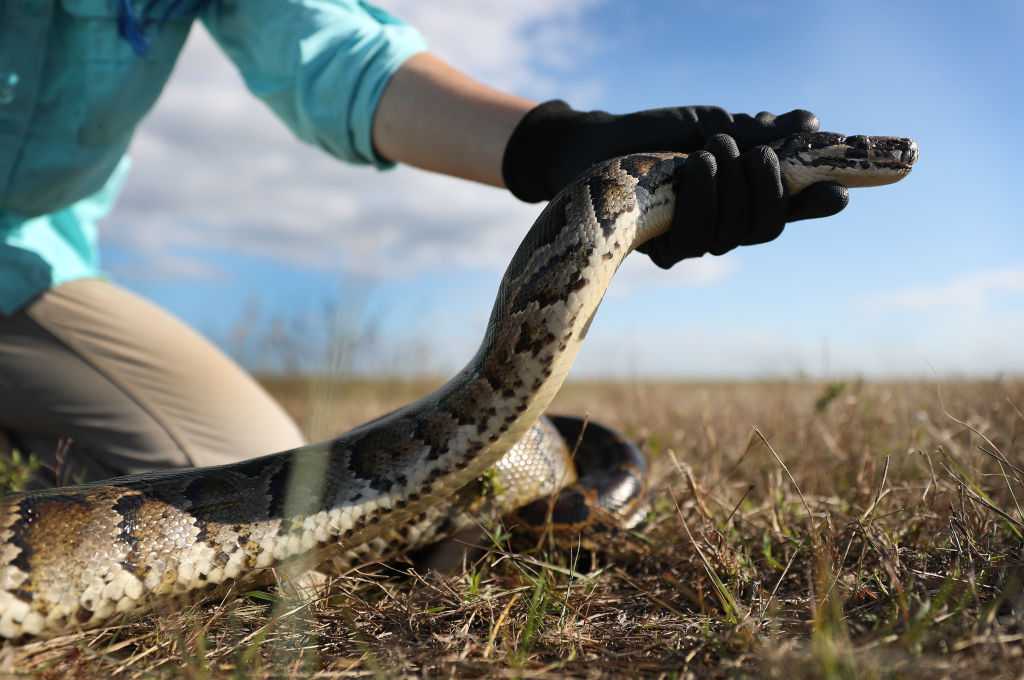
The raccoons and possums were fitted with tracking devices, so the researchers had to retrieve the tracking devices.
While retrieving the tracking devices, the scientists discovered that it allowed them to find the Burmese pythons that had eaten the possums or raccoons.
The researchers determined that using raccoons and possums with tracking devices as bait could help with capturing Burmese pythons and removing them from the environment.
The USDA National Invasive Species Information Center and the Florida Fish and Wildlife Conservation Commission (FWC) have designated the Burmese python as an invasive species, as the large snakes are native to Southeast Asia.
Burmese pythons were introduced in the United States as exotic pets, but over the years, the snakes either escaped or were intentionally released into the wild, primarily in South Florida.
Since 2017, the FWC has enacted the Python Action Team — Removing Invasive Constrictors program to find and kill Burmese pythons on public lands.
As of April 2025, the state has removed more than 23,500 pythons from public lands, and of that total, more than 11,000 pythons were removed by the Python Action Team in conjunction with the South Florida Water Management District.
The FWC also sanctions the 10-day Florida Python Challenge annually.
The competition encourages participants to remove Burmese pythons from seven locations in South Florida.
CLICK HERE TO VIEW INTERACTIVE MAP
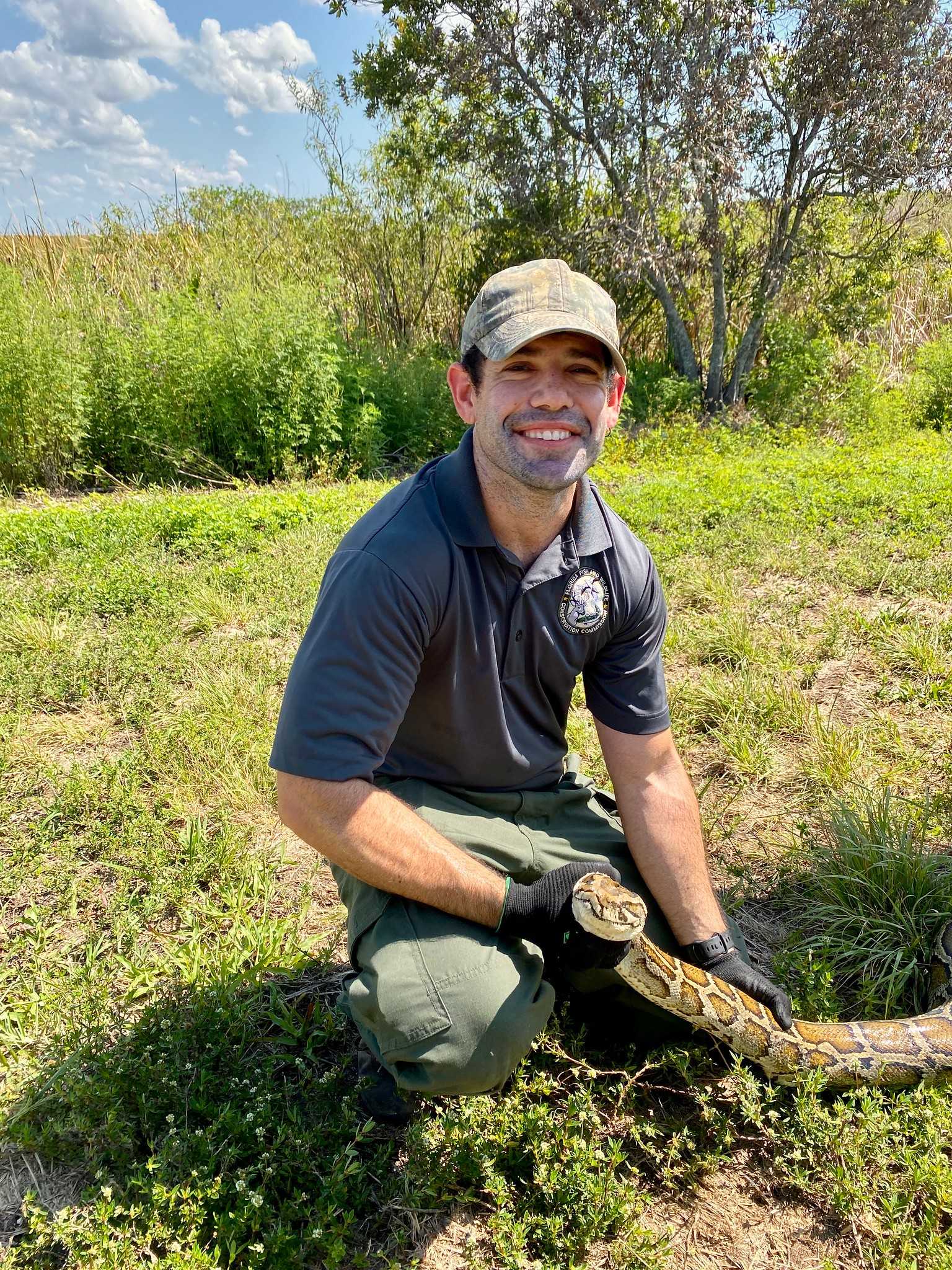
Participants who reach certain criteria are eligible for cash prizes. According to the FWC, last year, a record 294 Burmese pythons were removed from South Florida with the help of 934 participants from 30 states and Canada.